Waste usage optimizes resources in the creation of new culinary preparations
DOI:
https://doi.org/10.70221/rgc.v3i2.62Keywords:
Mermas, Optimización de recursos, Preparaciones culinariasAbstract
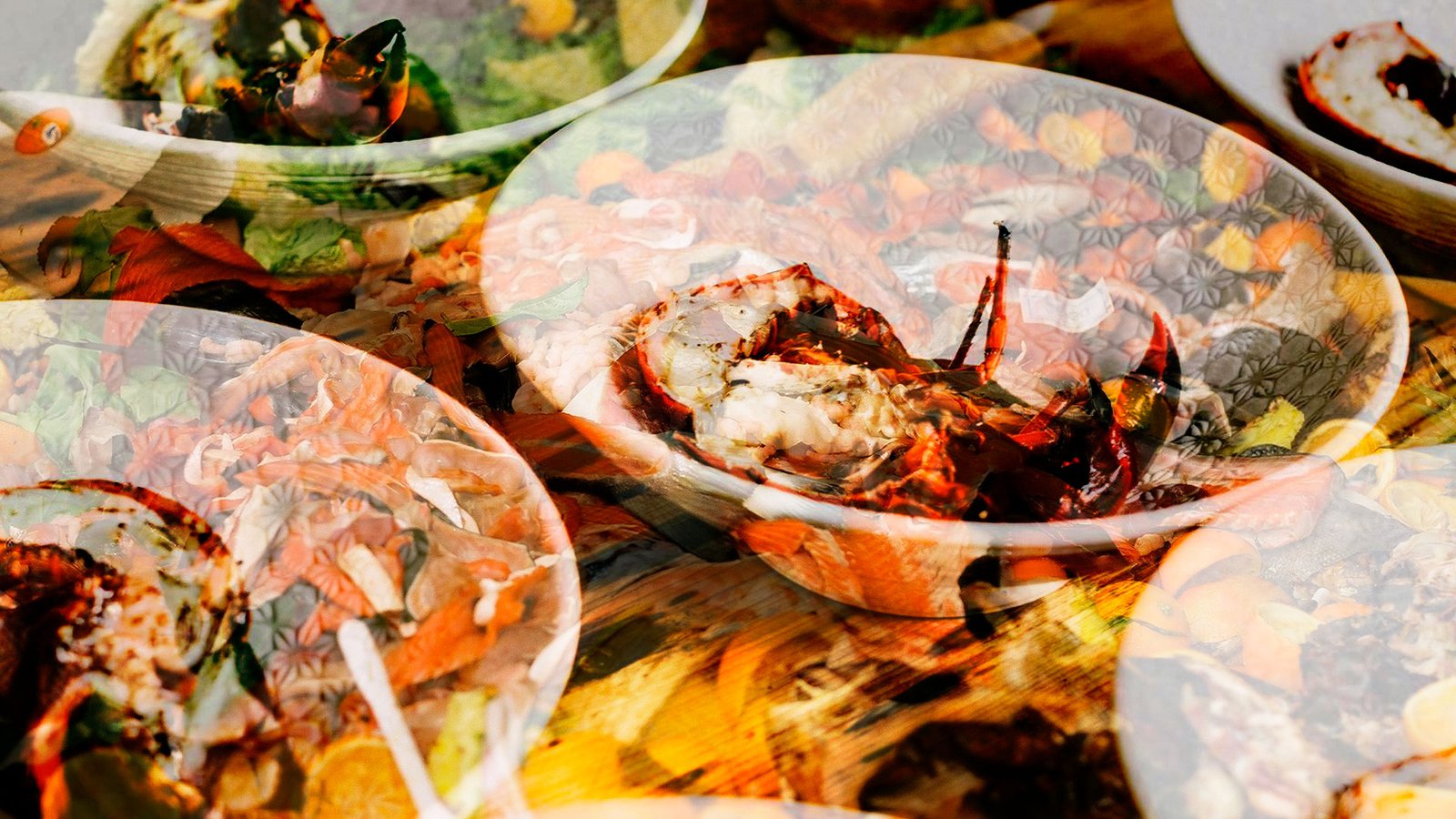
The reduction of food waste in the culinary field is a complex issue, not only because it involves economic factors, but also because it has become a topic of social and environmental responsibility. This responsibility aligns with the Sustainable Development Goals (SDGs), especially given the current environmental challenges. This concern is also emphasized in contemporary gastronomy, which highlights respect for food resources, as well as creativity and innovation in conventional culinary processes. This research is applied and cross-sectional, compiling important bibliographic and hemerographic concepts for the theoretical construction of the study. The objectives are aimed at demonstrating alternative uses of food waste, leading to the creation of novel, versatile products, and above all, optimizing food resources.
Downloads
References
Arnold, D. (2014). Liquid intelligence: The art and science of the perfect cocktail (First edition). W.W. Norton & Company.
Benítez Peña, E. M., Serrano Ramírez , J., Paredes Morales, Y. R., & Moreno Cortés, K. C. (2023). Nivel de aceptación de bizcochos elaborados a partir de harina de pulpa residual de la leche de almendra por baby boomers. Revista De Gastronomía Y Cocina, 2(EE1), 1–21. https://doi.org/10.70221/rgc.8178847 DOI: https://doi.org/10.70221/rgc.8178847
Culinary Institute of America (Ed.). (2011). The professional chef (9th ed). John Wiley & Sons.
Davidson, A., y Jaine, T. (2006). The Oxford companion to food (2nd ed). Oxford University Press. DOI: https://doi.org/10.1093/acref/9780192806819.001.0001
Duarte-Casar, R. (2022). Ají Manabita o Ají Manaba: Presencia en Redes del Condimento de una Provincia. Revista De Gastronomía Y Cocina, 1(1). https://doi.org/10.70221/021220 DOI: https://doi.org/10.70221/021220
Escoffier, A. (1912). Le guide culinaire: Aide-mémoire de cuisine pratique (3a ed.). https://gallica.bnf.fr/ark:/12148/bpt6k96923116
Espín Oleas, G. . A., Galarza, I., & Guevara-Aroca, F. X. (2024). Ingeniería de menús basada en costos de producción, una herramienta para la rentabilidad de los restaurantes. Revista De Gastronomía Y Cocina, 3(1), 314. https://doi.org/10.70221/rgc.10950666 DOI: https://doi.org/10.70221/rgc.10950666
Garcia, J. P., Capelari, M. G., Guéneau, S., Zaneti, T. B., & Diniz, J. D. (2024). The role of chefs and gastronomy in transforming the Brasília food system. in Evaluating Sustainable Food System Innovations, 36. Routledge. DOI: https://doi.org/10.4324/9781003285441-3
González, N. (2011). Control de mermas y desperdicios en almacen de condimentos de indústrfia avícola. Universidad de San Carlos de Guatemala, Guatemala. Obtenido de http://biblioteca.usac.edu.gt/tesis/08/08_2365_IN.pdf
González-Amagua, J., Garzón-Mosquera, F., & Cedeño-Castro, T. (2022). Ají ecuatoriano: Importancia y Maridajes. Revista De Gastronomía Y Cocina, 1(1). https://doi.org/10.70221/011119 DOI: https://doi.org/10.70221/011119
Le-Fort.org (2022). Costos en Gastronomía. Obtenido desde https://le-fort.org/costos-en-gastronomia/
MATCOM. (2001). Merma, elemento didáctico para personal de las cooperativas de consumo. Organización Internacional del Trabajo. Obtenido de https://www.ilo.org/wcmsp5/groups/public/---ed_emp/---emp_ent/---coop
Méndez- Lagunas, L., Rodríguez-Ramírez, J., & García-Cortes, M. Y. (2008). Variaciones del contenido de humedad por efecto de congelado a temperaturas de criogenia. Revista Mexicana de Ingeniería Química, 7(2), 139-144.
O’Neil, D. (Director). (2023, agosto 11). Improved Super Juice [Video]. https://www.youtube.com/watch?v=pHQZG_lfv_I
Organización de las Naciones Unidas. (15 de septiembre de 2015). Objetivos de desarrollo sostenible. Obtenido de https://www.un.org/sustainabledevelopment/es/objetivos-de-desarrollo-sostenible
Pachon, C., Mallorga, D., & Duran, C. (2020). Plan de manejo de mermas de alimentos en el centro de distribución de construyamos Colombia del municipio de melgar Tolima. Universidad Piloto de Colombia Seccional del Alto Magdalena, Cundinamarca, Girardot, Colombia. Obtenido desde http://repository.unipiloto.edu.co/bitstream/handle/20.500.12277
Paez, A. (2017). Gray literature: An important resource in systematic reviews. Journal of Evidence-Based Medicine, 10(3), 233–240. https://doi.org/10.1111/jebm.12266 DOI: https://doi.org/10.1111/jebm.12266
Santa María, P., & Mertens, A. (2014). Gestión de la Merma en el Sector Turismo de Restaurantes. Organización Internacional del Trabajo. Obtenido de http://www.oitsimapro.org/uploads/3/1/9/0/31906627/guia
SRI. (2020). El Reglamento de la Ley de Régimen Tributario Interno. Quito, Ecuador.
Unilever Food Solutions. (2021). Gestión de mermas. Gastrogestión Brochure. Obtenido de https://www.unileverfoodsolutions.es/dam/ufs-es/es/brochure
Downloads
Published
License
Copyright (c) 2024 Fausto Fabricio Garzón-Mosquera, Tania Cedeño-Castro, Digna Elizabeth Sánchez-Trávez, Jaime González-Amagua

This work is licensed under a Creative Commons Attribution 4.0 International License.
You are free to:
Share — copy and redistribute the material in any medium or format
Adapt — remix, transform, and build upon the material for any purpose, even commercially. The licensor cannot revoke these freedoms as long as you follow the license terms.
Under the following terms:
Attribution — You must give appropriate credit, provide a link to the license, and indicate if changes have been made. You may do so in any reasonable manner, but not in any way that suggests the licensor endorses you or your use.
No additional restrictions — You may not apply legal terms or technological measures that legally restrict others from doing anything the license permits.